About me
From a village with centuries of beekeeping tradition to a certified beekeeper in Bergen who practices natural beekeeping — the story of how bees became my life.
The sound that started everything
Since childhood, the sound of bees has been music to me. In Obora, the village in Moravia where I grew up, the trees hummed when they were in bloom, and the linden in front of our family home would fill with bees when it flowered. That sound still gladdens my soul today — and it is the reason I do what I do.
Roots in Obora
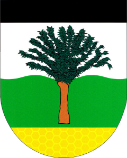
Obora was founded in 1360, and its coat of arms bears a honeycomb and a tree. Beekeeping has been part of the village since time immemorial. I was surrounded by it before I understood it: the local cooperative Včelpo Obora supplied the honey for my kindergarten, and my very first bee sting happened on the village playground.
The teacher
In 2010, Obora celebrated its 650th anniversary. It was there that I met Josef Stejskal from Hutě — the most experienced beekeeper I had ever known, and, as it happens, a distant relative of mine. He took me to his apiary and taught me the craft hands-on, passing down knowledge kept alive across generations. He taught me to work calmly and gently with the bees — so calmly that I often tend them without any protective suit at all. Because he is family, I can truly say I learned the foundations of beekeeping within my own family. I have been a beekeeper ever since.
A tradition on both sides
Beekeeping runs deep in my family. My great-grandfather kept bees in Voděrady u Kunštátu. My wife’s grandfather kept bees in Ukraine — and his tradition lives on in the Ukrainian horizontal hives I build with my own hands today. I never met them; they passed before my time. But through Josef Stejskal, and through the hives I build, both family lines come together in what I do.
From a lecture hall to a calling
My path took an academic turn when I heard doc. Ing. Antonín Přidal, Ph.D. lecture on the Varroa mite at a beekeepers’ meeting in Boskovice. I was so captivated that I arranged to study under his guidance at Mendel University in Brno, where I completed the course Beekeeping and Bee Product Processing. Doc. Přidal is one of Central Europe’s foremost experts on Varroa destructor, and I am proud to be his student.
The road to Norwegian certification
Becoming a certified beekeeper in Norway took more than experience with bees — it took the language. Everyday Norwegian doesn’t get you far in an apiary: beekeeping is agriculture, bees count as livestock on a par with cattle and sheep, with their own regulations and a technical vocabulary you won’t find in any language-school textbook. So once I had A1 and A2 in place, I took Yrkesnorsk for jordbruk, skogbruk og gartnerinæringen (Vocational Norwegian for agriculture, forestry and horticulture) with Folkeuniversitetet, over Zoom from February to June 2024. The course was free, as part of the Bransjeprogrammet (a Norwegian industry-skills programme) — and it’s worth saying out loud: without that opportunity, my whole path would probably have been delayed by several years. It was that course that got me started as a hobby farmer.
When the language began to stick, I joined Norges Birøkterlag (the Norwegian Beekeepers’ Association) in March 2024 and decided to give it a go. When, shortly after, I asked Bergen og Omegn Birøkterlag (the Bergen and District Beekeepers’ Association) whether I could take the beekeeping course with my limited Norwegian, I got an honest answer: the textbook exists only in Norwegian, and the sessions are built on discussion. The course runs only once a year, so I spent the half-year preparing. When registration opened in September, I signed up — and the association made room for those of us who didn’t speak fluent Norwegian. On top of that I built my own AI agent, Kompetansekurs om bier (“Competence course on bees”), which explained the Norwegian regulations in Czech and taught me the technical terms. In November 2024 I passed the certification, and the agent was later held up within the association as a tool for future foreign participants.
The course gave me more than a certificate: it gave me a community. Among the participants was Gordiy Lebediev from Kharkiv, who later helped me build my two Ukrainian horizontal hives — and he was far from the only good contact from that group.
The certificate, though, was only half the road. Keeping bees in Obora and keeping bees in Bergen are two different crafts. Back home in Moravia the summer has clear nectar flows and the linden trees bloom as they should; here the bees meet rain, wind and a short, unpredictable season. The frame sizes are different and the season is another, and much of what I learned at home doesn’t simply carry over. Through the 2025 season Leila Marie Frid took me out into the apiary and gave me what I needed to bridge the two: the hands-on practice that isn’t in the textbook. She wanted me to succeed with bees in Norway, not just pass a test. My first bees I bought from her. Today they live in a Ukrainian horizontal hive that I built from solid wood on Sotra and finished in Bergen — and they have already overwintered there.
The learning doesn’t stop there. Bergen og Omegn Birøkterlag holds talks and courses throughout the year, and when I get stuck, I can ask experienced beekeepers who know bees under demanding conditions — rain, wind and short summers. That may be the most valuable thing of all: belonging to a community that has kept bees in western Norway for generations.
Beekeeping in Bergen
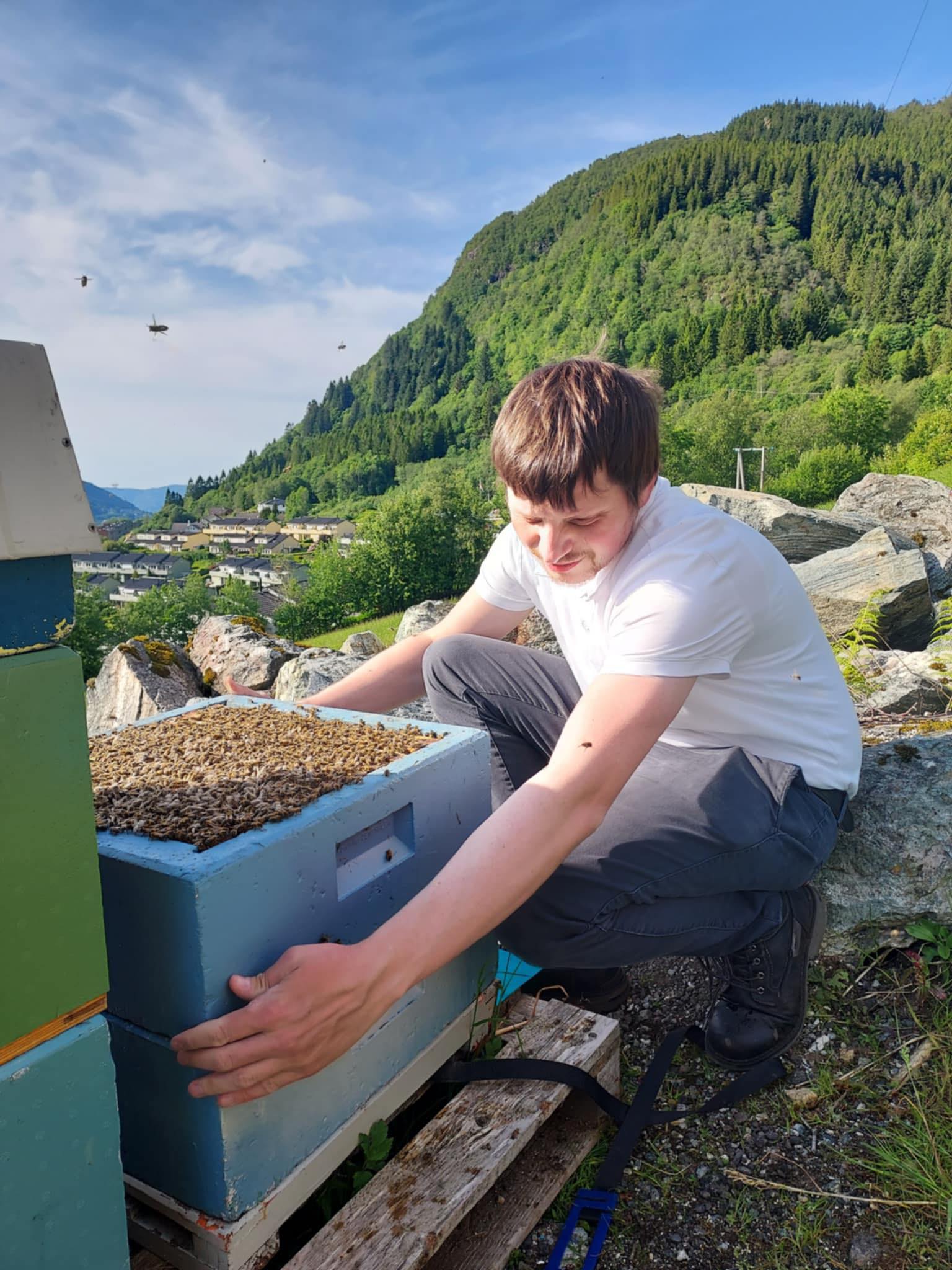
Today I keep bees in Bergen, where I am a certified beekeeper. I build my own hives from wood — including Ukrainian horizontal hives and the insulated wooden Gregor-type hive. That hive was originally made by my friend Jan Gregor, from whom I took over the craft and received permission to continue making them; for rainy Bergen, the outer shell is additionally protected against water. I follow natural-beekeeping methods where I can: I let the bees build as they wish, and I make sure they keep enough honey to eat and to winter on. I aim to let them winter on honey; I supplement with sugar only when a colony does not have sufficient stores. I only take honey once a colony’s own winter stores are secure.
I currently tend five colonies, and I keep building more hives. People have already started reaching out because they are interested in my hives.
Why I do this
I am not building a honey business. I am building a biological reserve — healthy, chemical-free colonies kept outside the commercial system and preserved for the generations who come after us. And I want to bring bees back into our cities, so that one day, walking past a blossoming tree, you will hear them too.
Want to collaborate, ask about my hives, or simply talk about bees? Get in touch — I’ll be glad to hear from you.